
Scaling an ecommerce business beyond seven figures requires more than strong sales. It requires financial clarity. Many sellers focus on marketing, inventory, and expansion while overlooking the systems that support long term stability. Bookkeeping is the foundation that makes sustainable growth possible.
An ecommerce specialist accountant understands that scaling introduces complexity. Marketplace fees, multi channel payouts, inventory timing, and tax compliance all require structured oversight. Without monthly bookkeeping, sellers lose visibility, miss profit leaks, and expose themselves to compliance risk.

Why Bookkeeping Is the Foundation of Ecommerce Growth
Growth multiplies transactions, fees, and operational decisions. Without accurate books, it becomes impossible to measure real performance. Clean bookkeeping transforms raw sales data into actionable insight.
Working with an experienced ecommerce CPA ensures your financial records reflect the true state of your business and support confident decision making.
Visibility Into True Profit Margins
Revenue alone does not determine profitability. Proper bookkeeping separates gross sales from platform fees, refunds, advertising costs, and cost of goods sold so you can see actual margins.
Cash Flow Management During Rapid Growth
As inventory purchases increase, cash flow timing becomes critical. Accurate monthly books help you anticipate shortfalls before they become operational problems.
Preventing Small Errors From Becoming Large Problems
Unreconciled accounts and misclassified expenses can compound over time. Regular bookkeeping catches issues early, preventing expensive cleanup later.
Managing Complex Ecommerce Payout Structures
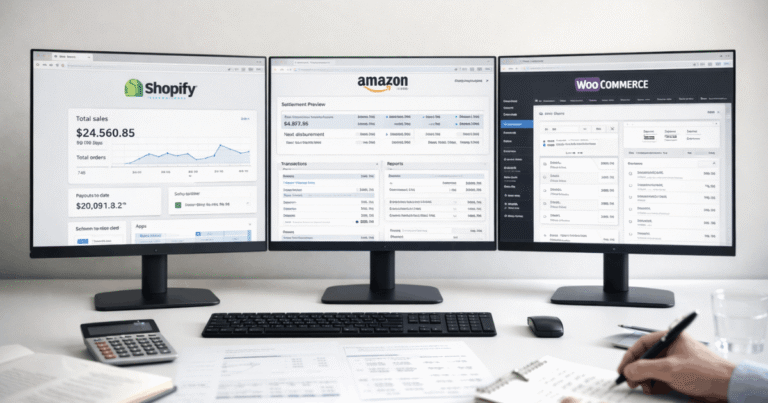
Ecommerce platforms do not operate like traditional retail systems. Deposits rarely match daily sales totals. Instead, settlements include deductions for fees, refunds, and chargebacks.
An accountant for ecommerce understands how to decode these payout structures and record them accurately.
Amazon Settlement Reconciliation
Amazon pays sellers based on settlement cycles, not individual orders. Deposits must be reconciled against detailed reports to ensure revenue and expenses are properly recorded.
Shopify Payments and Gateway Fees
Shopify payments include processing fees and adjustments that must be separated from revenue to avoid overstating income.
Multi Channel Sales Consolidation
Sellers operating across Amazon, Shopify, Walmart, and other platforms need consolidated reporting that reflects total performance without double counting.
Specialized Amazon Bookkeeping Services and Shopify Bookkeeping Services provide structured processes to manage these complexities accurately.
Why Monthly Reconciliation Is Non Negotiable
Monthly reconciliation ensures that your books match reality. It confirms that bank balances, marketplace reports, and accounting software are aligned.
Without monthly reconciliation, financial statements become unreliable, making scaling decisions risky.
Matching Platform Reports to Deposits
Deposits should always match reconciled settlement reports. This protects accuracy and reduces audit risk.
Reviewing Expenses and Advertising Spend
Advertising costs and software subscriptions must be categorized correctly to evaluate return on investment.
Closing the Books Consistently Each Month
Consistent monthly close processes provide dependable financial statements for analysis and planning.
Many growing sellers rely on structured Monthly Accounting Plans to maintain discipline and accuracy throughout the year.
Inventory and Cost Tracking for Accurate Profit Reporting
Inventory is one of the largest investments for ecommerce businesses. Without accurate tracking, profit margins can be distorted.
An ecommerce accounting specialist ensures cost of goods sold is matched correctly to sales activity.
Accrual Accounting for Inventory Based Sellers
Accrual accounting matches income with related expenses in the correct period, providing a realistic view of profitability.
Monitoring Gross Versus Net Sales
Gross sales figures can be misleading if fees and refunds are not deducted properly. Net reporting reflects actual earnings.
Identifying Margin Pressure Early
Accurate cost tracking highlights rising supplier costs or shipping increases before they erode profit.
Compliance, Taxes, and Audit Readiness
Scaling ecommerce businesses face increased scrutiny from tax authorities and potential investors. Clean books are essential for compliance and audit readiness.
An experienced ecommerce tax accountant ensures that bookkeeping supports accurate tax filings and proactive planning.
Sales Tax and Nexus Management
Multi state sales require accurate tracking of tax collected and remitted. Poor bookkeeping increases exposure to penalties.
Income Tax Accuracy
Incomplete or inaccurate books delay tax preparation and increase audit risk.
Preparing for Nonresident Reporting
International sellers operating on US platforms must address non resident tax obligations correctly to avoid double taxation.
Raising Capital Requires Clean Financials
Investors and lenders evaluate financial statements before providing funding. Without accurate monthly books, raising capital becomes significantly more difficult.
Partnering with an experienced ecommerce accounting firm strengthens your position during funding discussions.
Investor Due Diligence
Investors examine historical financials, profit margins, and consistency. Clean books improve credibility.
Loan Applications and Credit Facilities
Banks require organized financial statements and tax compliance before approving capital.
Valuation Support Through Accurate Reporting
Reliable financial records strengthen valuation discussions and negotiation leverage.
Why Specialized Ecommerce Accountants Make the Difference
Traditional accountants may not understand marketplace complexities. Ecommerce businesses require professionals who understand platform integrations, automated reconciliation, and digital sales environments.
Professional ecommerce accounting services are built specifically for sellers who operate across online marketplaces.
Platform Fluency and Automation Tools
Specialists understand tools like A2X and QuickBooks Online and how to configure them for accurate reporting.
Real Time Profit Analysis
Detailed reports allow you to evaluate performance by channel and product category.
Strategic Planning and Tax Alignment
Bookkeeping and tax planning work together. Clean books support effective Ecommerce tax planning services that minimize liability and preserve cash flow.
When to Upgrade From DIY to an Ecommerce Specialist Accountant
Many sellers begin with spreadsheets or general bookkeeping services. As revenue grows, that approach often becomes unsustainable.
Recognizing when to bring in an ecommerce specialist accountant is critical for long term stability.
Signs Your Books Are Falling Behind
Delayed reconciliations, unclear profit margins, and inconsistent reporting signal that systems need improvement.
The Risk of Year End Cleanup
Waiting until tax season to fix bookkeeping issues increases stress and cost.
Building a Financial Foundation for Scale
Proactive monthly bookkeeping supports confident growth rather than reactive corrections.
Take Control of Your Ecommerce Financials
Scaling your ecommerce business requires more than strong revenue. It requires disciplined financial systems and consistent oversight.
If you are unsure whether your books are supporting growth, start with a Free QuickBooks Review to identify gaps in reconciliation and reporting accuracy.
You can also complete the Free Ecommerce Bookkeeping Self-Review to assess whether your current processes support compliance, capital readiness, and profitability.
FAQ
What does an ecommerce specialist accountant do?
An ecommerce specialist accountant manages marketplace reconciliation, inventory tracking, expense categorization, and tax compliance specifically for online sellers.
Why is monthly bookkeeping important for ecommerce businesses?
Monthly bookkeeping ensures financial accuracy, supports tax filings, and provides the data needed to make informed scaling decisions.
How does an accountant for ecommerce differ from a general accountant?
Ecommerce accountants understand platform settlements, multichannel sales, and automated integrations that general accountants may not handle effectively.
Can poor bookkeeping affect raising capital?
Yes. Investors and lenders require clean financial statements. Inaccurate books reduce credibility and can delay funding.
When should I hire an ecommerce accounting specialist?
If revenue is increasing, reports are unclear, or tax compliance feels uncertain, it is time to seek specialized support.