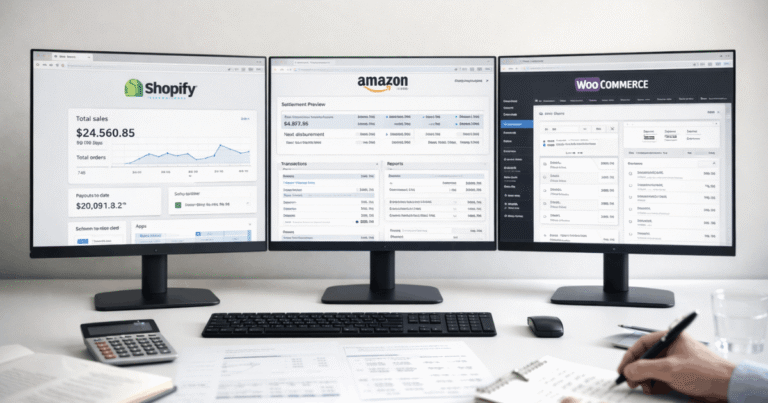

Every ecommerce seller wants to grow profits, but few realize how much of that growth depends on accounting. It is not just about tracking income and expenses. Smart accounting reveals where your business earns the most, where money leaks occur, and how to plan strategically for better margins.
If you have ever asked, “How can accounting help maximize my e-commerce profits?” the answer lies in using accurate data to make informed decisions. With professional systems and guidance, you can transform bookkeeping from a compliance task into a profit strategy.

Why Accounting Is the Foundation of E-Commerce Profitability
Before you can grow profits, you need to know where they truly come from. Accounting provides that visibility. It translates sales, fees, refunds, and costs into actionable insights that help you manage cash flow and plan for growth.
Working with an experienced ecommerce CPA ensures your books reflect reality across multiple platforms, helping you understand which products, campaigns, and channels are driving results.
Many sellers underestimate how important their initial setup is. If you’re still early in your journey, this guide on Ecommerce Set Up Bookkeeping: Getting It Right From Day One is a helpful starting point for building strong financial systems.
Turning Financial Data Into Business Insight
Accurate accounting converts raw sales data into clear profit reports. This allows you to make pricing, inventory, and ad spend decisions with confidence and directly answers the question “how can accounting help maximize my e-commerce profits” by showing you where your true margins are coming from.
Identifying Hidden Costs That Reduce Profit
From platform fees to shipping costs, small leaks can quickly erode your margins. Accounting for ecommerce identifies these hidden expenses early.
Amazon sellers face a unique mix of fees, refunds, and payout timing. For a practical breakdown of how to stay in control, see How To Do Bookkeeping For Amazon Sellers Without Losing Control.
Measuring Performance by Channel or Product
When your accounting system tracks data by marketplace, product, or region, you can easily compare which channels are most profitable.
Accounting Strategies That Boost Profit Margins
Profitability in ecommerce depends on understanding every detail of your financials. Accountants help build processes that not only track performance but also optimize it over time.
A professional ecommerce accounting firm develops systems to manage cost of goods sold, overhead, and taxes efficiently, turning financial management into a tool for profit growth.
Accurate COGS Tracking for True Profit Measurement
Your cost of goods sold directly impacts your margins. Proper tracking ensures you understand your real profit after product and shipping expenses, a major factor when asking “how can accounting help maximize my e-commerce profits” for each SKU you sell.
Using Accrual Accounting for Better Decision-Making
Accrual accounting recognizes revenue when earned and expenses when incurred, giving you a more accurate view of profitability.
Tax Efficiency and Cash Flow Planning
Your accountant can identify opportunities for deductions, credits, and timing strategies that preserve more cash for reinvestment.
Expense Categorization for Smarter Spending
Organized expense tracking helps you identify which costs contribute to growth and which can be reduced without hurting performance.
The Role of Accounting Software in Profit Optimization
Modern ecommerce accounting relies heavily on software integration. Tools like QuickBooks Online and A2X automate reconciliations, map marketplace payouts, and ensure data accuracy.
With help from ecommerce accounting services, your systems can automatically track profits and detect discrepancies that manual processes often miss.
Automating Data From Multiple Marketplaces
Integrations connect Amazon, Shopify, and Walmart sales data directly into your books, reducing manual work and error risk.
Real-Time Profit Reporting
Automation provides up-to-date visibility into your cash flow and margins, allowing you to respond quickly to market trends.
Building Dashboards for KPI Tracking
Your accountant can create dashboards to monitor profitability metrics such as ROI, average order value, and ad efficiency.
As your business scales, the right tech stack becomes non-negotiable. Our breakdown of Ecommerce Bookkeeping Software: Tools Every 7-Figure Seller Should Know walks through the tools that help automate reconciliations and protect accuracy.
Accounting Insights That Drive Smarter Decisions
Accounting gives ecommerce sellers the data needed to make faster, smarter business moves. Beyond compliance, it is a decision-making tool that helps you manage growth strategically.
An amazon seller CPA can help you interpret your numbers to spot trends, allocate resources, and avoid costly mistakes that hurt your margins.
Forecasting for Inventory and Marketing
Accountants use historical data to forecast sales and expenses, helping you stock products efficiently and avoid cash shortages.
Managing Seasonal Cash Flow
Predicting high and low seasons allows you to plan spending and reinvest profits at the right time.
Identifying the Most Profitable SKUs
Product-level accounting reveals which SKUs generate the highest returns and which are underperforming, another key insight when evaluating “how can accounting help maximize my e-commerce profits” based on product performance.
Shopify sellers experience a different mix of payouts, discounts, and multi-channel complexity. This is covered in detail in Bookkeeping for Shopify: Specialized Support for High-Revenue Stores.
Why Outsourcing Accounting Can Increase Profitability
While many sellers start with DIY bookkeeping, growing ecommerce businesses need expert support to stay profitable. Outsourced accountants bring structure, accuracy, and proactive advice that internal teams may not have time to manage.
Working with specialists in accounting for online sellers means your books are handled by professionals who understand ecommerce complexities.
Reduced Errors and Reconciliation Delays
Experienced accountants ensure that all sales, refunds, and fees are accurately reconciled across every platform.
Proactive Tax and Compliance Management
Ecommerce accountants keep your filings current and reduce the risk of penalties or missed deductions.
More Time to Focus on Growth
Delegating financial management allows you to concentrate on scaling, marketing, and customer experience while knowing your numbers are reliable.
As online businesses scale, bookkeeping becomes less about transactions and more about strategy. Bookkeeping for Online Business: Why 7-Figure Sellers Can’t Afford Generalists explains why specialist support matters at higher revenue levels.
Measuring Profit Beyond Sales Revenue
High revenue does not always mean high profit. Accounting reveals the difference between gross income and true net profitability, giving you the clarity to make smarter choices about pricing, operations, and expansion.
Gross vs Net Profit: The Real Story Behind Your Numbers
Gross profit shows total earnings before costs, but net profit reveals what truly remains after all expenses. Clean books help you analyze both accurately.
Using Benchmarks and Ratios for Better Analysis
Accountants use industry benchmarks to compare your performance against similar sellers, highlighting where improvements are possible.
Monitoring Return on Ad Spend (ROAS)
By integrating ad spend with your accounting system, you can identify which campaigns deliver the best financial results.
Strong bookkeeping is also the foundation of compliance and stress-free growth. The fundamentals are outlined in Bookkeeping for Ecommerce: The Key to Tax Compliance and Stress-Free Scaling.
Building a Profitable Future With Data-Driven Accounting
Profit-focused accounting is not a one-time project. It is an ongoing process of analysis, improvement, and strategy. As your ecommerce business scales, continuous financial visibility becomes your biggest competitive advantage.
With ongoing support through Monthly Accounting Plans, your business can maintain clean, actionable data that supports long-term profit growth.
Regular Profit Reviews and Adjustments
Monthly reviews help you catch emerging cost trends and fine-tune strategies before they affect your bottom line.
Preparing for Tax Season and Funding Opportunities
Clean, organized books make tax filing smoother and increase your readiness for loans or investment rounds.
Continuous Advisory for Smarter Growth
Your accountant becomes your financial partner, offering insights to help you sustain profitability as you expand into new markets.
Take Control of Your Profits With Expert Ecommerce Accounting
Profit growth starts with clarity. By turning financial data into insight, accounting gives you the tools to make better decisions, reduce waste, and build a stronger business.
Ready to Maximize Your E-Commerce Profits?
If you’re ready to get clearer numbers, better insights, and a more profitable ecommerce business, book a call today.
You’ll get expert guidance tailored to your business and a clear plan for improving your financial systems.
FAQ
How can accounting help maximize my e-commerce profits?
Accurate accounting reveals where your business is most and least profitable. By analyzing costs, margins, and trends, you can make smarter financial decisions that directly improve profit.
Why is accounting important for online sellers?
Accounting for ecommerce ensures your sales, expenses, and taxes are accurate across platforms, helping you maintain compliance and plan strategically.
Which accounting method is best for ecommerce businesses?
Accrual accounting provides the clearest picture of profitability by matching income with related expenses in the same period.
Can accounting software replace a professional accountant?
Software automates data, but professionals interpret it. Combining automation with expert guidance produces better results.
How often should I review my financial reports?
Monthly reviews help identify profit trends and prevent costly errors, especially for multi-channel sellers.